ChatGPT Prompts to Turn It Into a Marketing Expert
Are you struggling with marketing strategy, content creation, or campaign optimization while competitors gain market share? In today's digital landscape, leveraging AI tools effectively is becoming the difference between marketing stagnation and breakthrough performance.
A recent McKinsey study revealed that marketers using AI tools for content creation and strategy report 40% time savings and 30% improvement in campaign performance. Yet most marketing teams barely utilize AI beyond basic content generation.
This comprehensive guide uncovers 75+ powerful ChatGPT prompts specifically designed to transform it into a marketing expert. Whether you're a startup founder, marketing manager, or agency professional, you'll discover prompts for strategy development, audience targeting, content creation, and performance optimization.
Continue reading to unlock the full potential of AI-assisted marketing and join the professionals who are achieving marketing success with strategic ChatGPT integration.
Understanding AI's Role in Modern Marketing
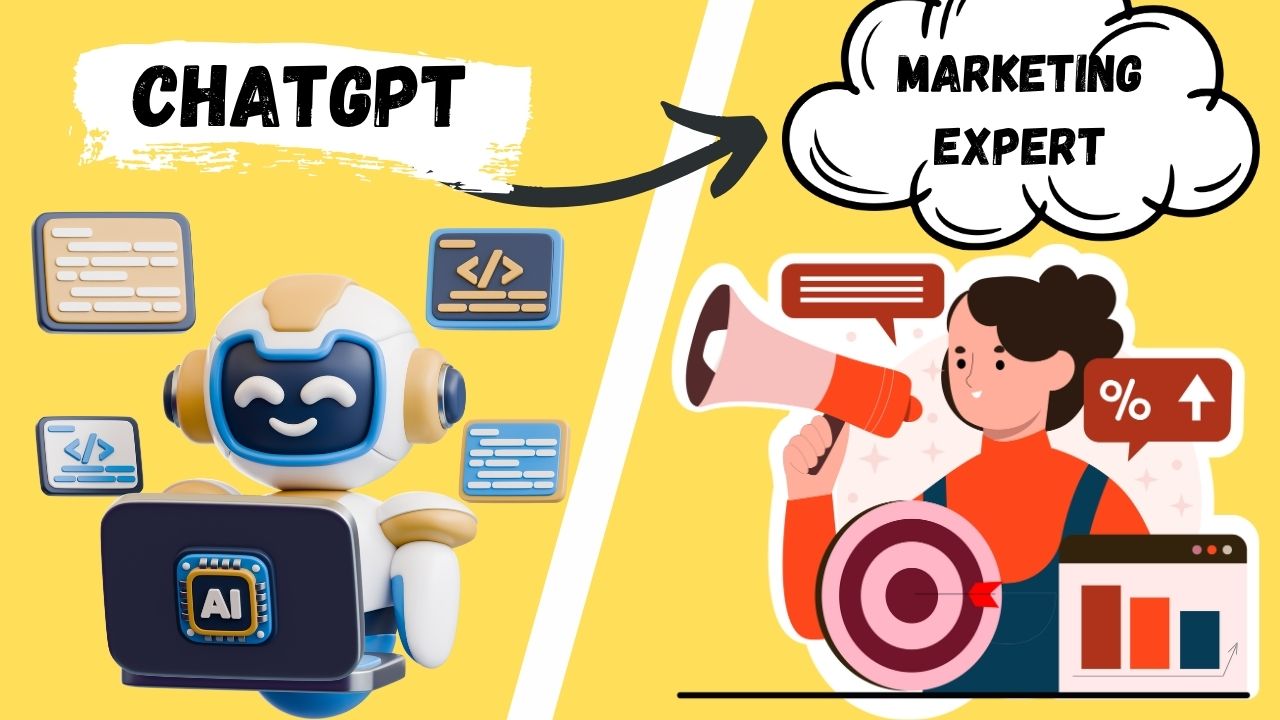
ChatGPT represents a paradigm shift in how marketers approach strategy, content creation, and campaign optimization. Unlike traditional marketing tools, ChatGPT functions as a versatile marketing assistant capable of assisting with everything from audience analysis to performance reporting.
Marketing Productivity Statistics
According to research from Gartner, marketing teams using AI tools effectively report 35-50% reductions in content creation time and 25-40% improvement in campaign ROI. Marketing agencies using AI assistance complete client projects 60% faster while maintaining quality standards.
What makes ChatGPT uniquely powerful for marketing is its ability to:
- Analyze market trends and competitive landscapes rapidly
- Generate marketing strategies and campaign frameworks
- Create compelling content across multiple channels and formats
- Develop audience personas and targeting strategies
- Optimize campaigns based on performance data and insights
The key to unlocking these benefits lies in understanding how to communicate effectively with the AI for marketing purposes. Just as with human marketing specialists, the quality of instructions (prompts) directly determines the usefulness of output.
Marketing tools have evolved significantly over the past decades:
| Era | Primary Tools | Marketing Focus | Limitations |
|---|---|---|---|
| Pre-2000s | Print media, TV, Radio | Mass marketing, brand awareness | Limited targeting, high costs |
| 2000s-2010s | Email marketing, Early digital ads | Digital transition, basic targeting | Channel-specific, limited analytics |
| 2010s-2020s | Marketing automation, Analytics platforms | Personalization, multi-channel | Data silos, complex integration |
| 2020s+ | AI assistants like ChatGPT | Intelligent automation, predictive insights | Learning curve for effective prompting |
This evolution highlights the shift from tools that help us execute campaigns to those that help us strategize, create, and optimize more effectively.
Marketing Strategy & Planning Prompts
Effective marketing begins with solid strategy. These ChatGPT prompts help you develop comprehensive marketing plans, competitive analyses, and strategic frameworks.
Strategic Planning
Marketing Plan Developer
Create comprehensive marketing plans for products or services.
Competitive Analysis Framework
Analyze competitors and identify market opportunities.
Go-to-Market Strategy Builder
Develop launch strategies for new products or services.
Brand Development
Brand Positioning Architect
Develop compelling brand positioning strategies.
Brand Voice Developer
Define and articulate brand voice and tone guidelines.
Value Proposition Crafter
Create compelling value propositions that resonate.
Real-World Application: Marketing Director
Michael, a marketing director at a SaaS company, uses ChatGPT for strategic planning: "I provide ChatGPT with our business objectives, target market, and competitive landscape, and it helps me develop comprehensive marketing strategies with clear KPIs and implementation plans. This has reduced our strategic planning cycle from 6 weeks to 2 weeks while ensuring we don't miss important market opportunities."
Audience Research & Persona Development Prompts
Understanding your audience is crucial for effective marketing. These ChatGPT prompts help you develop detailed buyer personas, identify customer needs, and create targeted messaging.
👥 Buyer Personas
Detailed profiles of ideal customers and their behaviors
🎯 Customer Journey
Mapping touchpoints from awareness to advocacy
💡 Pain Points
Identifying customer challenges and motivations
📊 Segmentation
Dividing audiences into targeted groups
Persona Development
Buyer Persona Creator
Develop comprehensive buyer personas with depth.
Customer Journey Mapper
Map the complete customer journey across touchpoints.
Pain Point Analyzer
Identify and address customer challenges effectively.
Messaging & Positioning
Message Framework Developer
Create consistent messaging across channels.
Email Sequence Writer
Create targeted email sequences for different audiences.
Ad Copy Generator
Create compelling ad copy for different platforms.
| Journey Stage | Customer Goals | Key Touchpoints | Marketing Actions | Success Metrics |
|---|---|---|---|---|
| Awareness | Identify potential solutions | Social media, blogs, ads, events | Educational content, brand awareness | Reach, impressions, website traffic |
| Consideration | Evaluate options | Website, reviews, demos, comparisons | Case studies, webinars, product info | Engagement, lead quality, demo requests |
| Decision | Make purchase decision | Sales calls, pricing pages, trials | Offers, testimonials, guarantees | Conversion rate, sales cycle length |
| Retention | Get value from purchase | Onboarding, support, community | Education, check-ins, exclusive content | Retention rate, product usage |
| Advocacy | Share positive experience | Reviews, referrals, social sharing | Referral programs, community building | NPS, referrals, social mentions |
This framework demonstrates how marketing actions should align with customer needs at each stage of their journey with your brand.
Content Marketing & Creation Prompts
Content is the fuel of modern marketing. These ChatGPT prompts help you develop content strategies, create engaging content across formats, and optimize for performance.
Content Strategy
Content Strategy Developer
Create comprehensive content marketing strategies.
Blog Topic Generator
Generate engaging blog topics that drive traffic.
Content Calendar Planner
Plan and organize content across channels.
Content Creation
Blog Post Writer
Create comprehensive, SEO-optimized blog posts.
Social Media Content Creator
Generate engaging social media content across platforms.
Email Newsletter Writer
Create engaging email newsletters that get opened.
Content Marketing Insight: The 4-1-1 Rule
Effective content marketing often follows the 4-1-1 rule: for every six pieces of content, four should entertain/educate, one should be soft-sell, and one can be hard-sell. Use ChatGPT to ensure your content mix provides value first while strategically incorporating promotional content. This builds trust and authority while still driving business results.
Channel-Specific Marketing Prompts
Different marketing channels require specialized approaches. These prompts are tailored to maximize performance across key digital marketing channels.
Social Media Marketing
Platform Strategy Developer
Create channel-specific social media strategies.
Social Ad Copywriter
Create high-converting social media ad copy.
Social Content Calendar
Plan engaging social media content calendars.
SEO & Content Marketing
SEO Keyword Strategy
Develop comprehensive SEO keyword strategies.
On-Page SEO Optimizer
Optimize web pages for search engines.
Content Brief Creator
Create detailed content briefs for writers.
Channel-Specific Success Factors
Each marketing channel has different optimization requirements: Social media prioritizes engagement and shareability; SEO focuses on relevance and authority; Email marketing values personalization and deliverability; PPC demands conversion optimization. Tailor your ChatGPT prompts to emphasize the success factors specific to each channel while maintaining consistent brand messaging across touchpoints.
Marketing Analytics & Optimization Prompts
Data-driven marketing requires effective measurement and optimization. These ChatGPT prompts help you analyze performance, derive insights, and improve campaign results.
⚠️ Data Accuracy Reminder
ChatGPT should be used as an analytical assistant, not as a data source. Never input confidential business data or customer information. Always verify insights against your actual analytics platforms. The marketer maintains ultimate responsibility for data interpretation and business decisions.
Performance Analysis
KPI Dashboard Designer
Design effective marketing dashboards.
Campaign Performance Analyzer
Analyze marketing campaign results.
A/B Test Hypothesis Generator
Create data-driven testing hypotheses.
Optimization & Testing
- Data-Driven Decisions: Use ChatGPT to help interpret data patterns and trends
- Testing Framework: Develop systematic approaches to testing and optimization
- Performance Forecasting: Create models to predict campaign outcomes
- Attribution Analysis: Understand customer journey touchpoint effectiveness
- Competitive Benchmarking: Compare performance against industry standards
Pro Tip: The Marketing Funnel Analysis
Frame your analytics using the marketing funnel: analyze top-of-funnel metrics (awareness, reach), middle-of-funnel (engagement, consideration), and bottom-of-funnel (conversion, retention). Use ChatGPT to identify leaks in your funnel and suggest specific improvements at each stage. This systematic approach ensures you're optimizing the entire customer journey rather than isolated metrics.
Ethical Considerations & Best Practices
Using AI in marketing requires careful attention to ethical principles and industry standards. These prompts help you navigate the ethical landscape of AI-assisted marketing.
Ethical Marketing Practices
Compliance Checker
Ensure marketing compliance with regulations.
Transparency Statement Writer
Create appropriate AI usage disclosures.
Bias Identification Prompt
Identify potential biases in AI-generated marketing.
Responsible AI Integration
- Transparency: Clearly document how AI was used in your marketing process
- Human Oversight: Ensure final decisions and brand messaging remain human-driven
- Privacy Protection: Never input customer data, proprietary information, or confidential strategies
- Brand Consistency: Maintain brand voice and values across AI-assisted content
- Continuous Validation: Regularly verify AI suggestions against market reality
Pro Tip: The Marketing Team Member Analogy
Frame ChatGPT use as you would working with a marketing team member: you provide strategic direction and brand oversight, the assistant helps with implementation. You wouldn't let a junior marketer publish content without review, nor would you present their initial ideas as final strategy. The same principles apply to AI tools—leverage their efficiency while maintaining marketing leadership and responsibility.
Marketing Workflow Integration
Knowing effective prompts is only valuable if integrated into a sustainable marketing workflow. This section provides strategies for making ChatGPT an efficient part of your marketing process.
Efficient Marketing Planning
Streamline your marketing process with these approaches:
- Campaign Phase Alignment: Use different prompt types for strategy, creation, execution, and analysis phases
- Template Development: Create reusable prompt templates for recurring marketing tasks
- Progressive Refinement: Start with broad prompts and iteratively refine based on initial outputs
- Knowledge Management: Maintain a marketing library of effective prompts and their outcomes
Sample Marketing Workflow Integration
A well-organized marketing workflow might include: Strategy Development (market analysis, positioning, planning), Content Creation (ideation, writing, design direction), Campaign Execution (channel setup, audience targeting, budget allocation), and Performance Analysis (reporting, optimization, learning). ChatGPT can assist at every stage with targeted prompts while you maintain strategic oversight.
Weekly Marketing Planning Session
Build consistent ChatGPT interactions into your marketing schedule:
| Session | ChatGPT Activity | Expected Outcome | Time Investment |
|---|---|---|---|
| Strategy Session (60 min) | Competitive analysis, campaign planning | Clear strategic direction and KPIs | 45-50 minutes |
| Content Session (45 min) | Content ideation, copywriting assistance | Weekly content plan and drafts | 30-35 minutes |
| Channel Session (30 min) | Platform-specific optimization, ad copy | Channel-ready marketing assets | 20-25 minutes |
| Analysis Session (30 min) | Performance review, insight generation | Actionable optimization recommendations | 20-25 minutes |
| Innovation Session (30 min) | Trend analysis, new opportunity identification | Forward-looking marketing ideas | 20-25 minutes |
This sample schedule demonstrates how focused ChatGPT sessions can enhance marketing productivity without replacing critical strategic thinking.
Advanced Integration Strategies
For established marketing teams, these advanced strategies can further enhance ChatGPT integration:
- Custom Instructions: Use ChatGPT's custom instructions to provide persistent context about your brand, audience, and marketing objectives
- Content Systems: Use ChatGPT to help develop content operations and workflow systems
- Testing Frameworks: Leverage prompts for developing systematic testing approaches and hypothesis generation
- Stakeholder Communication: Use ChatGPT to prepare marketing reports, presentations, and business cases
Frequently Asked Questions
Using verbatim ChatGPT-generated content in marketing campaigns requires careful consideration. While AI can dramatically speed up content creation, best practice is to use ChatGPT for ideation, structure, and initial drafts, with human marketers refining and adding brand voice. Some platforms have policies about AI-generated content, and customers may respond differently to purely AI-created materials. Always review, edit, and add human touch to AI-generated content before publication.
ChatGPT's knowledge has a cutoff date and may not include the most recent market developments. While it's excellent for generating frameworks and initial analysis, you should always verify any specific claims, data points, or competitive information against current market research and real-time data sources. Use ChatGPT for structuring your analysis and identifying areas to investigate, but conduct actual market research using primary sources and specialized tools.
ChatGPT offers instant access to marketing knowledge and can work continuously at minimal cost, but lacks the industry-specific experience, strategic judgment, and accountability of human marketing consultants. The most effective approach combines AI efficiency with human expertise: use ChatGPT for research, ideation, and initial drafting, while reserving strategic decisions, creative direction, and final approvals for experienced marketers. Think of ChatGPT as extending your marketing capacity rather than replacing professional judgment.
Maintain marketing ethics by: using ChatGPT as an assistant rather than autonomous decision-maker, thoroughly verifying all claims and data, ensuring transparency about AI involvement when required, maintaining human oversight of all customer-facing content, protecting customer privacy by never inputting personal data, and ensuring all marketing complies with industry regulations and platform policies. When using AI for customer communications, clearly distinguish between AI-assisted and fully automated interactions.
ChatGPT can provide analytical frameworks and help interpret patterns in described data, but should be used cautiously for complex marketing analytics. It's excellent for explaining marketing metrics, suggesting analytical approaches, and helping structure performance reports. However, you should always verify analytical insights against specialized tools and statistical methods. For advanced analytics, consult with data specialists or use dedicated marketing analytics platforms. ChatGPT works best as an analytical thinking partner rather than a replacement for data expertise.
Developing effective marketing prompts is an iterative process: start with clear marketing objectives, provide specific context about your brand and audience, use examples of the kind of output you want, progressively refine based on initial results, maintain a library of successful prompts, and learn from marketing communities of practice. The most skilled users treat prompting as a strategic conversation—they start with a solid initial prompt, then use follow-up questions to refine, expand, or redirect the output until it meets their marketing needs.
Key Takeaways: Enhancing Marketing with ChatGPT
Integrating ChatGPT into marketing requires both technical knowledge of effective prompting and deep understanding of marketing principles and consumer behavior. The most successful marketers treat ChatGPT as a versatile marketing assistant rather than an automation tool, leveraging its capabilities for research, planning, content creation, and optimization while maintaining their strategic judgment and creative direction. By implementing the prompts and strategies in this guide—focusing on audience understanding, channel optimization, and ethical practices—you can transform ChatGPT from a novelty into a valuable marketing asset. Remember that the goal isn't to replace marketing work but to enhance it, freeing up creative and strategic resources for high-value activities while systematizing routine marketing tasks. Start with a few high-impact prompts from categories most relevant to your current marketing challenges, gradually expand your prompt library, and continuously refine your approach based on the quality and usefulness of outputs for your specific marketing context.